


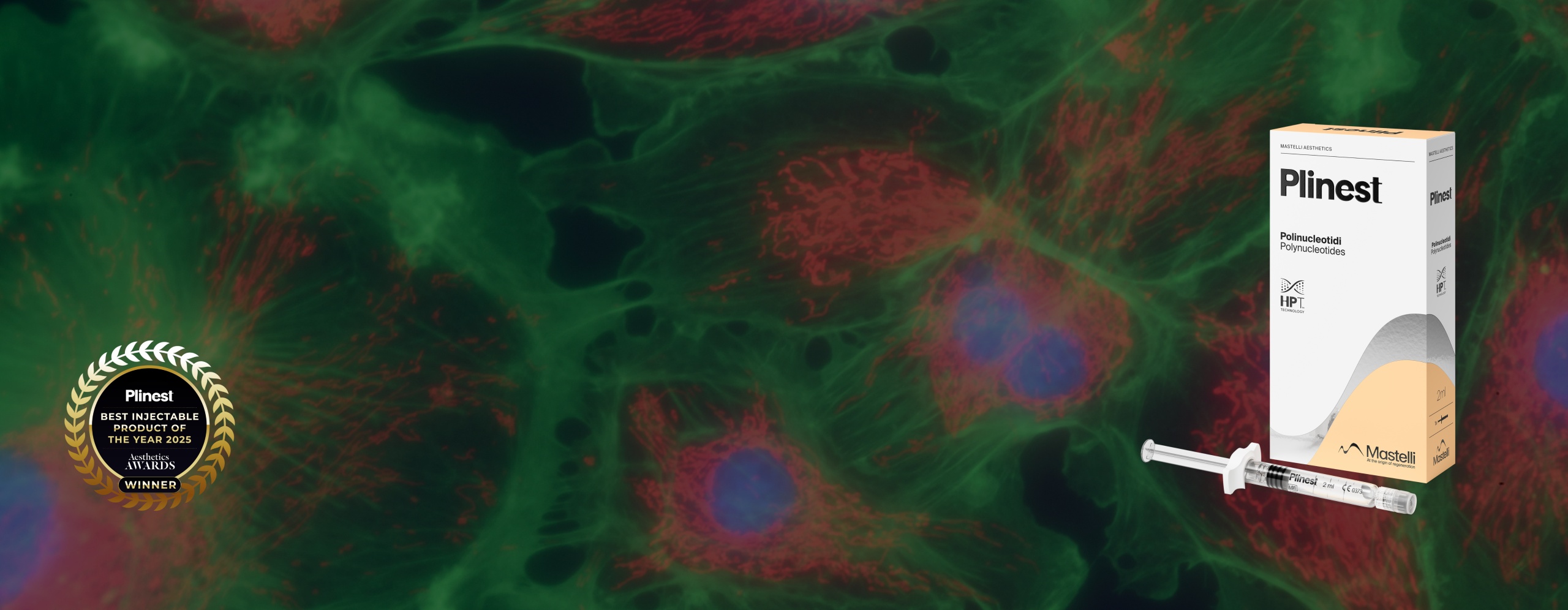
Polynucleotides are no longer an emerging trend – they’re an established cornerstone of regenerative aesthetic medicine. With clinical use expanding rapidly across protocols for skin quality, scarring, inflammation, and even hair restoration, practitioners are seeing first-hand the remarkable outcomes these biologically active molecules can deliver.
Their mechanisms of action are well understood within the scientific community, but revisiting how polynucleotides interact with skin cells on a molecular level is essential for refining treatment strategies and communicating value to patients. These aren’t just passive hydrators or collagen boosters – they are intelligent bio-modulators, capable of guiding cellular repair, modulating inflammation, and restoring tissue homeostasis.
In this blog, we take a closer look at how polynucleotides – particularly Plinest® Polynucleotides HPT® – engage with skin cells to activate and sustain regeneration from within.
What are polynucleotides?
Polynucleotides are highly purified DNA fragments, composed of long chains of nucleotides – the fundamental building blocks of DNA and RNA. In medical aesthetics, they are derived from carefully controlled biological sources and formulated for injectable use.
What makes them unique isn’t just their origin or purity – it’s their ability to interact biochemically with the skin’s cellular environment, helping to regulate inflammation, enhance repair, and rebuild dermal architecture from within.
Plinest®, in particular, is distinguished by its ethically sourced materials, exceptional purification processes, and a robust body of clinical research supporting its efficacy and safety. This makes it a trusted choice for practitioners seeking reliable, evidence-backed results in regenerative skin protocols.
Cellular mechanisms of action
Fibroblast activation
Polynucleotides directly stimulate fibroblast proliferation, increasing the synthesis of collagen and elastin. This cellular signaling is key to restoring skin density and elasticity, particularly in chronically stressed or ageing skin.
Inflammation modulation
They also exert anti-inflammatory effects by modulating cytokine activity – helping to calm the skin’s microenvironment and support more stable, long-term regeneration.
Supporting skin’s natural recovery process
Polynucleotides contribute to overall skin health by improving hydration, reducing inflammation, and creating a stable extracellular environment. These effects can help support the skin’s natural ability to recover from oxidative stress and UV-related damage, though their direct role in DNA repair pathways remains an area of ongoing investigation. Rather than acting on the repair mechanisms themselves, polynucleotides appear to foster the conditions needed for healthy cellular function and regeneration.
Optimising hydration
Combining hyaluronic acid with polynucleotides offers a balanced approach to skin restoration – one that addresses both immediate hydration and long-term repair. Hyaluronic acid supports moisture retention and volume, while polynucleotides contribute to a healthier extracellular matrix and cellular environment. Newest® is a formulation that brings these two components together (combining Polynucleotides HPT® and hyaluronic acid), enhancing both short-term skin plumpness and sustained regenerative activity for improved texture and resilience.
Angiogenesiss and oxygenation
Studies also suggest polynucleotides support angiogenesis, improving local microcirculation and tissue oxygenation – essential for treating devitalised, atrophic, or post-inflammatory skin.
Polynucleotides in practice: Plinest® HPT®
Plinest® Polynucleotides HPT® (Highly Purified Technology) represents a next-generation polynucleotide formulation, designed for optimal biocompatibility and tissue integration. Sourced from trout DNA and meticulously purified through a stringent lab process, Plinest® has shown excellent outcomes in improving lines and wrinkles, acne scarring, dermal thinning, hyperpigmentation, rosacea and in pre-conditioning the skin for more intensive procedures such as microneedling or energy-based devices.
Shifting from intervention to intelligent regeneration
The most effective aesthetic protocols today aren’t those that force change, but those that facilitate the body’s own repair capacity. Polynucleotides exemplify this shift: rather than imposing structural volume or suppressing movement, they work in harmony with skin cells to restore equilibrium.
Understanding how polynucleotides – especially advanced formulations like Plinest® Polynucleotides HPT® – communicate with fibroblasts and keratinocytes offers clinicians a deeper perspective on how to design smarter, more biologically aligned treatment plans.
As regenerative medicine continues to move from the margins to the mainstream, therapies that speak the language of the cell will increasingly define the gold standard in aesthetic care.



Recent Comments