


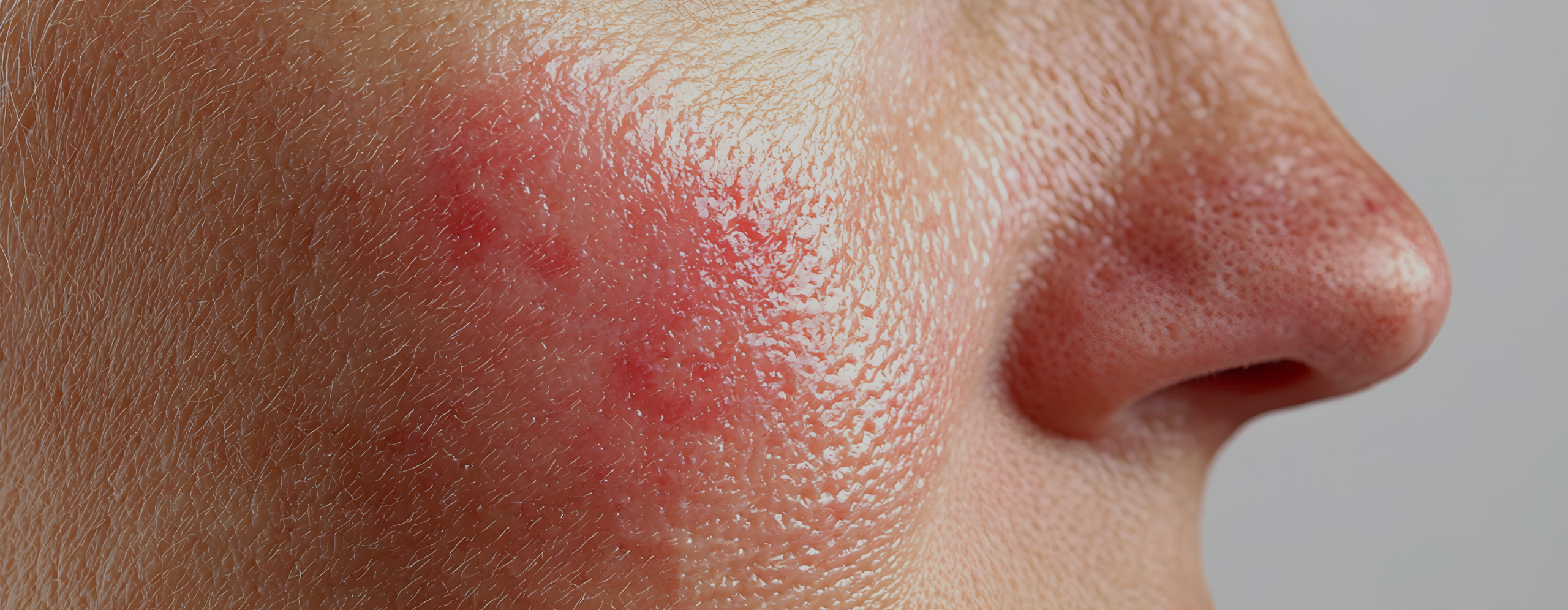
Rosacea has always been a complex condition – unpredictable, emotionally taxing, and notoriously difficult to manage long-term. For years, treatment protocols focused on suppression: reducing redness, calming flare-ups, and avoiding triggers. But as our understanding of the skin’s biology evolves, so too does our approach.
Today, more practitioners – and patients – are looking beyond temporary relief. They’re choosing treatments that don’t just mask the symptoms of rosacea, but actively support the skin in restoring its own balance. And at the heart of this shift is regenerative medicine — with products like Plinest® Polynucleotides HPT® offering new hope for calmer, stronger, more resilient skin.
From firefighting to future-proofing
Traditional rosacea care often feels reactive. Patients bounce between anti-inflammatories, antibiotics, and topical creams – all with varying degrees of short-term success. But what happens when you shift the focus from what needs to be suppressed to what the skin needs to recover?
This is where regenerative treatments stand apart. Instead of forcing the skin into submission, they work with it – helping repair damaged tissue, reduce inflammation at the cellular level, and strengthen the skin barrier over time.
Why rosacea responds to regenerative therapies
Chronic inflammation needs long-term modulation
Rosacea isn’t just surface redness – it’s a condition rooted in persistent, low-grade inflammation. Polynucleotides help regulate inflammatory pathways over time, creating a calmer skin environment without the rebound effect often seen with steroids or harsh topicals.
Barrier support is essential – not optional
We now understand that rosacea-prone skin typically has a compromised barrier, making it more vulnerable to environmental triggers and trans-epidermal water loss. Polynucleotides help rebuild that barrier from within – increasing hydration, improving resilience, and reducing reactivity.
Tissue oxygenation matters
Many regenerative actives, including Plinest®, have been shown to support angiogenesis and improve local oxygenation. For rosacea patients dealing with vascular instability or visible capillaries, this can be a game-changer – not just for appearance, but for skin function.
Clinical evidence: Plinest® and rosacea
Recent clinical studies have reinforced what many aesthetic practitioners are already seeing in practice: Plinest® is an effective and well-tolerated treatment option for rosacea-prone skin.
A 2022 clinical trial published in Journal of Cosmetic Dermatology evaluated the use of Polynucleotides HPT® in patients with erythematotelangiectatic rosacea. The study demonstrated statistically significant improvements in:
- Persistent erythema (redness)
- Skin sensitivity
- Capillary visibility
- Overall skin texture and hydration
Participants received a series of intradermal Plinest® treatments over 4-6 weeks. By the end of the study, most patients reported reduced discomfort, increased skin resilience, and a more even complexion. No adverse reactions were reported, underlining Plinest®’s high safety profile, even in delicate, inflammation-prone skin types.
In addition to clinical outcomes, histological analysis showed improved fibroblast activity, reduced inflammatory markers, and enhanced tissue regeneration – further validating the anti-inflammatory and reparative properties of Plinest®.
What patients are looking for – and finding
Rosacea sufferers are often highly informed – they’ve tried the creams, the prescriptions, the elimination diets. They’re not looking for yet another quick fix. They’re looking for:
- Fewer flare-ups
- Less redness and reactivity
- Improved texture and hydration
- Treatments that feel restorative, not irritating
Regenerative treatments align perfectly with these goals. And when patients see results that not only look natural, but feel healthier – it changes the way they engage with their skin and their care.
The role of Plinest® in rosacea protocols
Plinest® Polynucleotides HPT® is uniquely suited to support rosacea-prone skin. Its high-purity DNA fractions help calm inflammation, stimulate fibroblasts, and support tissue repair – all while maintaining excellent tolerability. Clinical experience and published studies show consistent improvement in:
- Diffuse redness
- Skin fragility
- Flare-up frequency
- Post-inflammatory pigmentation
Whether used as part of a course or integrated into a broader skin health protocol, Plinest® offers a well-tolerated, biologically intelligent option for managing rosacea from the inside out.
Shifting the narrative for rosacea patients
When you present rosacea not as something to be “controlled” but as something to be supported and regenerated, the entire conversation changes. Patients feel empowered. They understand their skin isn’t broken – it’s asking for help. And as a practitioner, you’re able to offer solutions that go beyond symptom suppression and build real, visible progress over time.
Want to learn how to build regenerative rosacea protocols in your clinic?
Join our next Plinest® training or speak to your Clinic Success Partner for support.



Recent Comments